Outings for autistic people: sensory information and choices
Prepare questions about the environment, build a flexible itinerary and confirm visit resources with the person responsible for the venue.
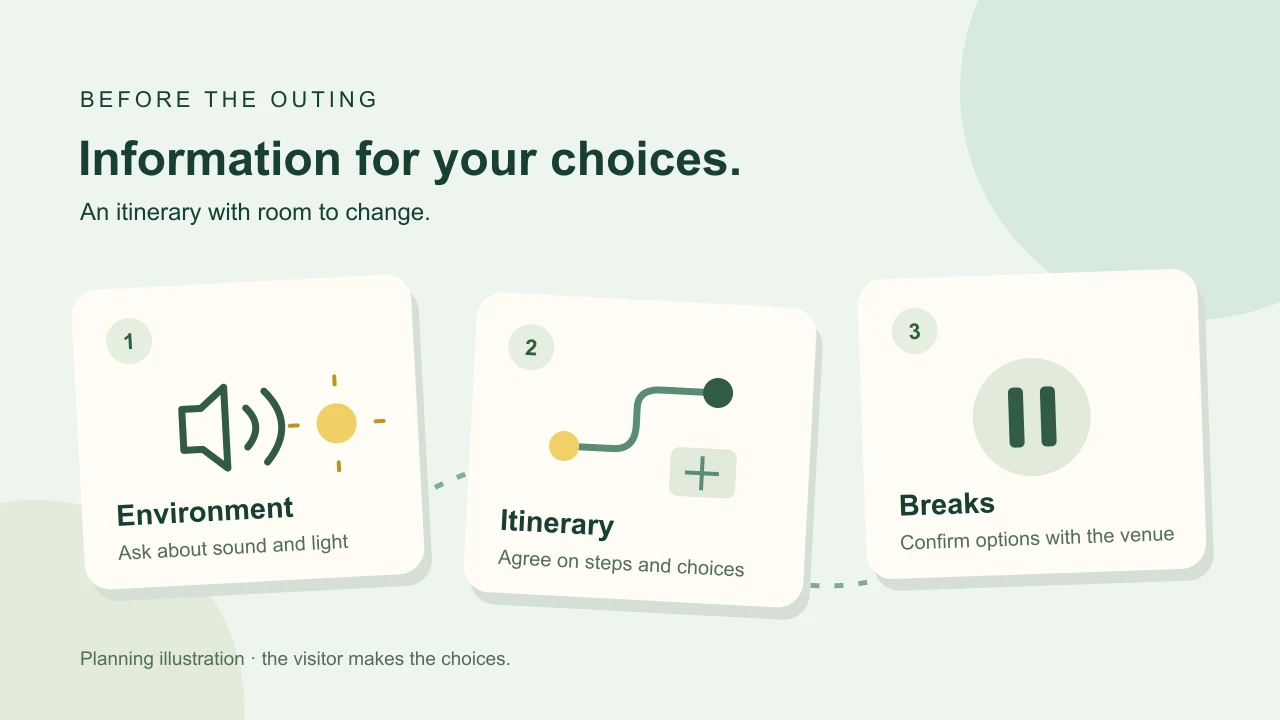
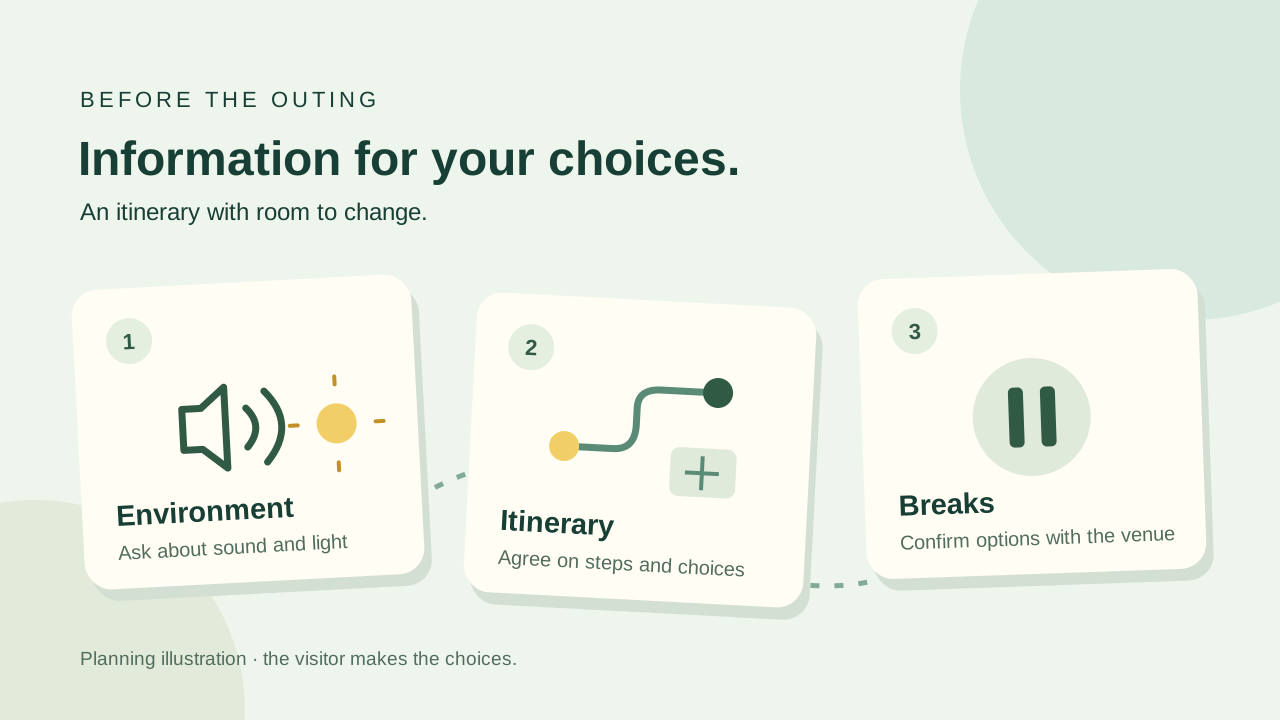
When deciding how to plan an accessible outing for an autistic person, start with the person's own choices and the information they want before leaving. Record what you still need to ask the venue.
This itinerary covers organizing the visit and communicating with staff. It does not assess clinical needs, recommend therapies or define an environment suitable for every autistic person.
The examples come from the Natural History Museum in Los Angeles, United States. Its materials help frame questions; they do not establish services at Brazilian venues or replace confirmation for your visit.
1. Agree on what the person wants to discover and decide
Before researching a destination, discuss the desired activity and how each person prefers to help plan. If there is a companion, also agree which tasks they will take on and which choices remain with the visitor.
Make a short list of the main activity, questions and alternatives. The purpose is to organize the conversation, without turning individual preferences into a rule about autism or requiring the whole outing to follow one format.
Choose how to save the answers: text, images, audio or another format the person already uses and wants to consult. Ask whether they want to know the route beforehand and how much detail they would like.
- What would I like to do first?
- Which decisions do I want to make on the day?
- How do I prefer my companion or staff to speak with me?
2. Ask specific questions about sound, light and moving around
Rather than simply asking whether a venue is inclusive, request a description of the areas you intend to visit. Keep separate answers about the entrance, exhibitions, food areas and exit.
The US museum's sensory guide describes light, sound and touchable elements in each area. Updated on May 7, 2025, it warns that it may not cover all sensitivities and that exhibitions can change.
Use this example to frame your own questions for your chosen destination. A description of another room, another exhibition or a previous visit should remain identified as a reference, with the current question still open.
Reference: NHM Los Angeles: Sensory Guide.
- Are there presentation, projection or equipment sounds along the chosen route?
- How can I find information about lighting and transitions between rooms?
- Who can explain queues, construction work or exhibition changes?
3. Build a visual sequence that can be changed
If the person wants a visual itinerary, request official photographs or materials showing the entrance and chosen spaces. Identify what each image shows and avoid treating a generic photograph as a picture of the actual route.
The museum's visual checklist, updated in May 2025, lets visitors arrange pictures of areas in a sequence and leave blank spaces for changes. It includes cards for communicating requests during the visit.
You can prepare your own note covering arrival, the desired activity and the return, in the visitor's chosen format. Confirm any sections missing from the materials with the venue, without filling gaps through assumptions.
Reference: NHM Los Angeles: Visual Checklist.
- Does this image show the entrance we will use?
- Does the itinerary distinguish confirmed arrangements from options?
- How will we check a change of plan during the outing?
4. Confirm breaks and resources for that particular visit
Ask where a break could be taken and how to reach that space. Confirm whether it will be open on your chosen date and whether any conditions apply; the phrase quiet space is not a sufficient description on its own.
On the museum's sensory school-visit page, the organizer says that some areas retain their usual lighting and sound. It also says that kits are limited and cannot be reserved for groups.
This example points to questions for your destination: which areas are adjusted and what depends on availability? Do not apply a US school offer to an individual visit or to another establishment.
Reference: NHM Los Angeles: Sensory Friendly Field Trip Day.
- Which break space will be available and how will it be identified?
- Does the advertised resource apply to my ticket type?
- If a loan item is unavailable, what will our alternative be?
5. Save the answers and agree on communication for the day
Send staff questions about the actual visit, including date and activity. Save the reply, contact channel and outstanding questions. A conversation about general operations does not automatically confirm a request for a specific session.
Prepare a short message presenting the arrangements the visitor wants to share. Decide together who will show it and what information is needed for the outing, without disclosing unnecessary personal details.
Before leaving, check official notices and whether tickets or routes have changed. Keep important information in a form that does not require an internet connection during the visit.
- Who can clarify a difference between what was agreed and what we find?
- How do I want to request a break, an explanation or the end of the visit?
6. Agree on the return and an alternative
Discuss what to do if the desired activity is unavailable or someone wants to change the itinerary. An alternative could be another part of the outing, another date or returning home; each choice remains with the participants.
Confirm transport, meeting points and whether leaving and re-entering is allowed separately. Do not assume a ticket permits re-entry or that transport can be changed without consulting the provider.
For entrance, circulation and cultural interpretation details, also consult our museum-visit guide. For a particular cinema programme, use the session and service questions in the audio-description cinema guide.
- How will we say that we want to change the plan?
- Which return arrangements still need confirmation?
Checklist before confirming
- Visitor preferences and involvement in planning agreed.
- Information about each area requested from the venue.
- Itinerary in the chosen format, with room for changes.
- Date and scope of replies recorded, with outstanding questions visible.
- Break space and conditions of use confirmed for the visit.
- Confirmed resources distinguished from those subject to availability.
- Contact details, ticket and replies saved for offline use.
- Return and an alternative outing agreed among participants.
Frequently asked questions
Does a sensory outing suit every autistic person?
The activity's name does not explain each visitor's preferences. Ask for a description of what will happen and discuss what the person wants to know, experience and decide.
How can I tell whether all rooms will be adjusted?
Ask the organizer for a list by area and session. The US museum's school page identifies areas without changes to usual conditions; this does not describe other venues.
Reference: NHM Los Angeles: Sensory Friendly Field Trip Day.
Must the visual itinerary be followed to the end?
Agree on how to use and change it. The checklist consulted provides blank spaces; in your plan, make clear which stages are choices and which conditions require confirmation from the venue.
Reference: NHM Los Angeles: Visual Checklist.
Can I count on a loan item being guaranteed?
Record the answer given for your visit. If staff say it depends on availability, keep that condition in your plan and ask about an alternative before relying on the item.
Planning guidance, not medical or legal advice. Confirm services, conditions and costs with the providers. Sources do not represent a SOL inspection or certification.
Sources and retrieval dates
- NHM Los Angeles: Sensory Guide
Retrieved: . Source update: .
US primary material, updated May 7, 2025. An example of area-specific information; it does not confirm current conditions in Brazil.
- NHM Los Angeles: Visual Checklist
Retrieved: .
The primary document states a May 2025 update without identifying a day. Retrieval is dated separately; no update day has been invented.
- NHM Los Angeles: Sensory Friendly Field Trip Day
Retrieved: .
Primary page with no identified editorial date. It describes a US school programme, not an individual or Brazilian offer. Three sources from the same operator.
Continue planning
- How to plan a visit to an accessible museum
- How to choose a cinema screening with audio description
- How to plan an accessible park outing
Would your organization like to prepare a more accessible experience? Discover SOL talks, training and consulting ↗